
Key Takeaways
- The UK wellness industry represents a massive £837 billion market with 64% of UK consumers actively taking steps to improve their health through products discovered on social media.
- Instagram and TikTok lead wellness product discovery, with authenticity and educational content generating significantly higher engagement than purely promotional posts.
- Emotional wellbeing has surpassed physical fitness as the top wellness priority for UK consumers, creating new opportunities for mental health-focused products.
- Trust factors like practitioner endorsements and genuine user testimonials are 3x more effective at converting followers to customers than polished branded content.
- Social media marketing in the healthcare sector is projected to reach $15.88 billion globally by 2030, with UK businesses seeing the highest ROI from platform-specific content strategies.
The wellness landscape in the UK has transformed dramatically, with social media becoming the primary discovery channel for health-conscious consumers. No longer just scrolling for entertainment, these platforms have evolved into powerful purchase-decision engines that drive the £837 billion wellness economy forward. Understanding this shift isn’t just important—it’s essential for anyone looking to connect with the modern wellness buyer.
Today’s UK wellness consumer navigates a complex journey across multiple platforms before making purchasing decisions. This represents both an unprecedented opportunity and challenge for wellness practitioners and brands. According to recent market analysis by inBeat Agency, the healthcare social media marketing sector is expected to reach $15.88 billion by 2030, indicating massive growth potential for those who understand these social wellness shoppers.
How UK Social Media Users Make Wellness Purchase Decisions in 2024
The modern wellness journey typically begins with awareness, often triggered by content that resonates emotionally rather than clinically. UK consumers report spending an average of 110 minutes daily on social platforms, with approximately 22% of that time exploring health and wellness content. What’s particularly fascinating is the shift from passive consumption to active engagement—wellness content receives 3.2 times more shares than other consumer categories.
The decision-making process has compressed significantly, with 47% of UK wellness buyers making purchases within 48 hours of discovering products on social media. This represents a dramatic acceleration compared to the traditional weeks-long consideration phase that dominated pre-social media shopping behaviors. Platform preferences show clear demographic patterns that smart wellness marketers can leverage.
What drives these rapid decisions? Trust signals make all the difference. Consumers are increasingly skeptical of polished marketing messages, instead seeking authentic content from practitioners, micro-influencers, and fellow wellness enthusiasts. Research shows that 60% of wellness purchases originated from content created by trusted individuals rather than brands themselves—a critical insight for those looking to convert followers into customers.
The £837 Billion UK Wellness Market: Who’s Buying and Where
The UK wellness market presents a diverse landscape of consumers united by their commitment to health improvement. Recent research reveals 64% of UK consumers are actively taking steps to live healthier lives, with social media increasingly influencing these efforts. This massive market spans multiple generations, each with distinct platform preferences and wellness priorities.
While millennials (26-41) remain the core wellness spending demographic, accounting for 41% of total market value, Gen Z (18-25) represents the fastest-growing segment with 27% year-over-year spending increases. What’s particularly notable is the growing influence of consumers aged 55+, who now represent 22% of wellness social media spending—up from just 8% in 2019. This demographic shift coincides with increased Facebook wellness commerce among older adults.
Demographics Driving UK Wellness Growth
The data paints a fascinating picture of who’s driving the UK wellness economy forward. Women continue to lead spending in most categories, representing approximately 67% of wellness purchases initiated through social channels. However, male wellness spending shows the strongest growth trajectory, particularly in mental wellbeing and fitness technology categories.
Urban consumers in London, Manchester, and Edinburgh lead in total wellness spending, but the most significant growth is happening in smaller cities and suburban areas where social media serves as a primary wellness discovery channel. Income demographics reveal that middle-income consumers (£30,000-£50,000 annually) represent the largest market segment, challenging the notion that wellness is exclusively a luxury market.
What’s particularly fascinating is how different demographics engage with wellness content. Gen Z consumers are 3.5 times more likely to purchase after seeing authentic user-generated content, while millennials respond more strongly to educational content that explains benefits. Baby boomers, meanwhile, place highest value on practitioner credentials and scientific validation, often researching products across multiple platforms before purchase.
Top 5 Wellness Categories Gaining Social Media Traction
- Mental wellbeing solutions: Apps, supplements, and services focused on stress reduction and emotional balance (72% YOY growth)
- Plant-based nutrition: Supplements, meal replacements, and functional foods (63% YOY growth)
- Sleep optimization: Technology, supplements, and environmental products (58% YOY growth)
- Sustainable fitness: Equipment and subscription services with eco-credentials (47% YOY growth)
- Personalized wellness tech: Wearables and testing services offering individualized insights (43% YOY growth)
Emotional Stability: The #1 Health Goal for UK Consumers
Perhaps the most significant shift in the UK wellness landscape is the prioritization of mental and emotional wellbeing over purely physical goals. Where physical fitness once dominated wellness aspirations, UK consumers now rank emotional stability as their primary health objective. This represents a fundamental reorientation of the wellness market that smart social media strategies must address.
According to research from GWI, 78% of UK wellness consumers now rank mental wellbeing as “very important” compared to 65% prioritizing physical fitness. This shift becomes even more pronounced in younger demographics, with Gen Z placing approximately 3.2 times more importance on emotional wellbeing than physical appearance—a complete reversal from trends observed just five years ago.
This emotional wellness focus has catalyzed growth in related product categories, with meditation apps, adaptogenic supplements, and sleep optimization products showing the strongest social media-driven sales growth. Content that addresses these emotional wellness needs—particularly authentic stories of transformation—generates 2.7 times higher engagement than purely product-focused posts.
Platform-Specific Buyer Behaviours That Drive Results
Understanding how UK wellness consumers behave on different social platforms is crucial for developing effective marketing strategies. Each platform attracts distinct demographic segments and facilitates unique wellness discovery journeys. By aligning content with these platform-specific behaviors, wellness brands can significantly improve engagement and conversion rates.
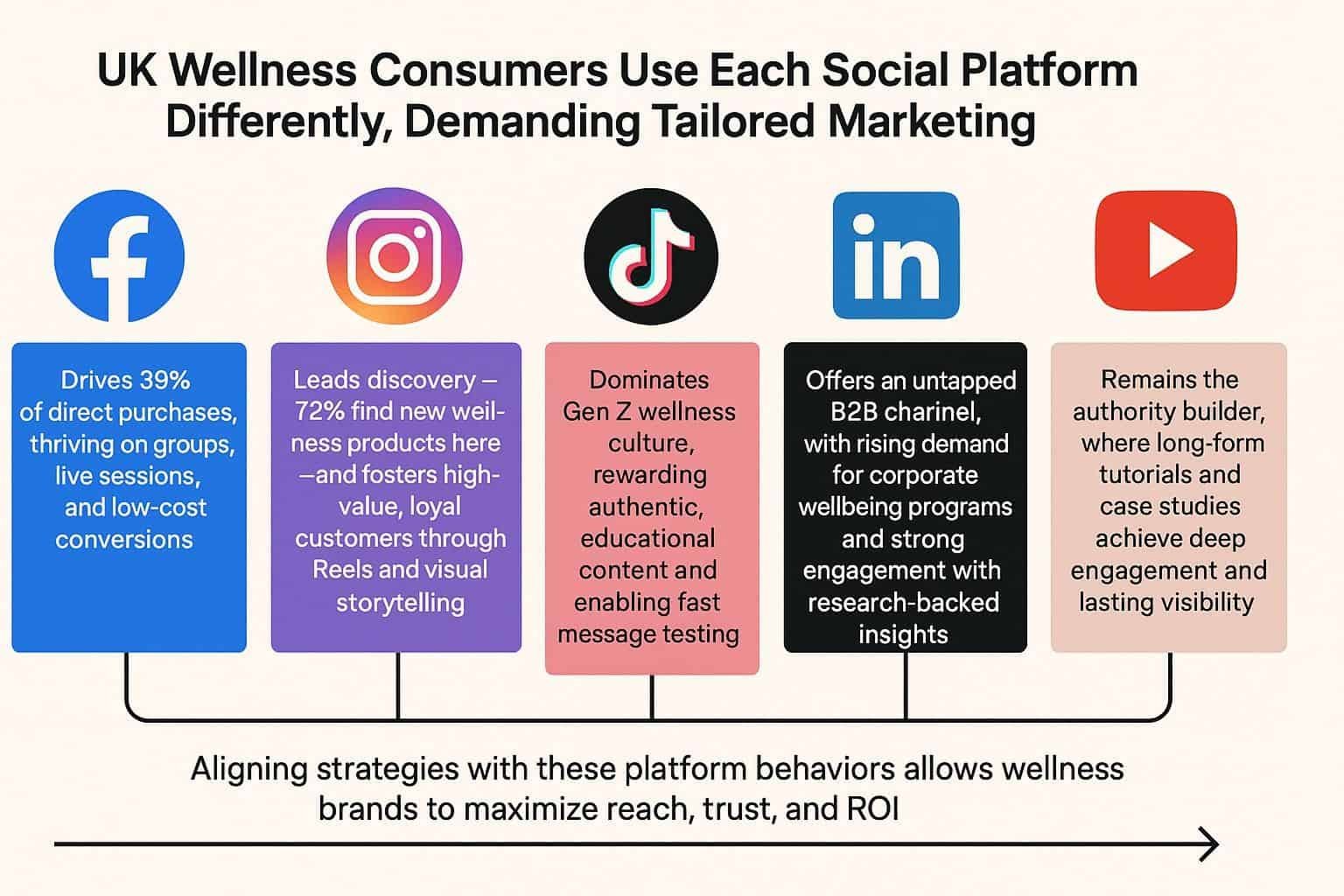
Facebook: Where 39% of Direct Social Purchases Happen
Despite reports of its declining relevance, Facebook remains the powerhouse for direct wellness purchases in the UK, particularly among consumers aged 35-55. The platform’s robust marketplace infrastructure enables seamless transactions, with 39% of direct social media wellness purchases occurring through Facebook’s ecosystem. What’s particularly effective is the platform’s community-building potential, with wellness groups generating 3.2 times higher conversion rates than brand pages alone.
Facebook’s algorithm favors long-form content that generates meaningful discussions, with wellness posts receiving 27% more comments than other industries. Wellness practitioners find particular success with live broadcasts, which average 4.5 times more engagement than standard posts and create opportunities for direct product demonstrations and Q&A sessions that build trust. The platform’s sophisticated targeting options also allow for precise audience segmentation based on wellness interests and behaviors.
For wellness practitioners with limited marketing budgets, Facebook offers the lowest cost-per-acquisition across major platforms, averaging £14.72 per customer—significantly lower than Instagram (£21.35) and TikTok (£23.47). This efficiency makes it particularly valuable for small wellness businesses and independent practitioners looking to maximize marketing ROI.
Instagram: The Visual Wellness Journey Creator
Instagram has established itself as the premier platform for wellness discovery, with 72% of UK wellness consumers reporting they’ve found new products through the platform. Its visual nature creates the perfect showcase for transformation stories, before-and-after content, and aspirational wellness imagery that drives strong emotional connections. The platform’s shopping features have evolved significantly, with direct purchase functionality now available through posts, stories, and reels.
What’s particularly notable is Instagram’s role in wellness customer journeys—while it may not always be the final purchase point, it serves as the initial discovery channel for 68% of wellness products ultimately purchased elsewhere. Wellness brands report that Instagram-originated customers have 22% higher lifetime value than those acquired through other channels, suggesting the platform attracts particularly committed wellness enthusiasts.
The shift toward Instagram Reels has been especially impactful for wellness content, with short-form video generating 3.4 times higher engagement than static posts. Successful wellness brands leverage this format for quick tips, ingredient spotlights, and mini-transformations that capture attention in crowded feeds. For practitioners, maintaining consistent visual branding across posts creates a cohesive wellness narrative that builds stronger brand recognition.
TikTok: How Gen Z Discovers Wellness Products
TikTok has revolutionized wellness marketing to younger demographics, with 81% of Gen Z consumers discovering at least one wellness product through the platform in the past year. The algorithmic nature of TikTok creates unprecedented reach potential, with wellness content from even small accounts regularly reaching hundreds of thousands of views. What distinguishes TikTok is its preference for authentic, educational content over polished marketing—with practitioners who share genuine insights seeing significantly higher engagement than branded content.
The platform’s unique “wellness TikTok” subculture has developed its own language and trends, from “that girl” morning routines to supplement reviews and mindfulness techniques. Successful wellness brands on the platform participate in these cultural conversations rather than interrupting them with traditional marketing. Educational content that explains the “why” behind wellness practices performs particularly well, with videos addressing scientific mechanisms generating 2.7 times more shares than purely aspirational content.
What’s particularly valuable about TikTok is its ability to rapidly test wellness messaging—practitioners can quickly determine which benefits, ingredients or approaches resonate most with their target audience through real-time feedback. The platform’s shopping functionality continues to evolve, with in-app purchase options now available to approved wellness vendors, streamlining the path from discovery to purchase.
LinkedIn: The Untapped B2B Wellness Goldmine
While consumer-focused platforms dominate wellness marketing conversations, LinkedIn has emerged as a surprisingly effective channel for B2B wellness connections and corporate wellness initiatives. The platform offers access to decision-makers who control employee wellness budgets, with 43% of UK businesses now allocating specific resources to staff wellbeing programs. Wellness practitioners who position themselves as workplace wellness experts can tap into this growing market through thought leadership content.
Corporate wellness content on LinkedIn generates 58% higher engagement than the platform average, with particular interest in programs addressing workplace stress, burnout prevention, and productivity enhancement. The professional nature of the platform creates opportunities for more detailed discussions of wellness research and evidence-based practices that may appear too technical on consumer platforms.
For wellness practitioners targeting corporate clients, LinkedIn offers sophisticated targeting options based on company size, industry, and job function that allow for precise marketing to relevant decision-makers. The platform’s preference for substantive, research-backed content aligns perfectly with the needs of corporate wellness buyers seeking credible solutions for their organizations.
YouTube: Long-Form Content That Converts
While short-form video dominates current social media trends, YouTube remains unmatched for in-depth wellness education that builds deep trust and commitment. The platform allows practitioners to demonstrate comprehensive expertise through detailed tutorials, explanations, and case studies that aren’t possible in shorter formats. What’s particularly valuable is YouTube’s incredible longevity—wellness content can continue generating views and conversions for years after posting.
UK wellness consumers report spending 3.2 times longer engaging with YouTube content compared to other platforms, with 78% watching videos to completion when seeking specific wellness information. This extended engagement creates opportunities for more complex explanations of wellness concepts, benefits, and practices that build stronger conviction in potential customers. The platform’s robust search functionality also makes it a valuable resource for wellness consumers actively seeking solutions to specific health challenges.
For wellness practitioners, creating a library of educational YouTube content establishes authority that supports marketing efforts across other platforms. The ability to embed YouTube content on websites and share across other networks creates a content ecosystem with YouTube at its educational core. While production quality expectations are higher than for short-form video, the extended value of well-crafted YouTube content justifies the additional investment for serious wellness brands.
Trust Factors That Turn Followers into Customers
In the competitive UK wellness space, trust has emerged as the critical factor separating successful brands from struggling ones. With consumers increasingly skeptical of marketing claims, establishing authentic credibility has become essential for converting social followers into paying customers. The most effective wellness brands focus on building trust systematically across their social presence rather than pushing immediate sales messages.
60% of Users Trust Practitioner Posts Above All Others
Research consistently shows that content created by wellness practitioners receives significantly higher trust ratings than content from brands or traditional celebrities. A remarkable 60% of UK wellness consumers rate practitioner-created content as “very trustworthy” compared to just 22% for brand-created content. This trust gap explains why practitioner-led wellness brands consistently outperform corporate alternatives in social media engagement and conversion metrics.
What makes practitioner content so effective? Consumers cite expertise demonstration, personal experience, and perceived authenticity as the key trust signals. When practitioners share their own wellness journeys, discuss client cases (anonymized appropriately), or demonstrate techniques from their practice, they create powerful credibility that commercial content rarely achieves. The most effective practitioner content balances professional expertise with personal relatability—showing both competence and humanity.
For wellness brands without in-house practitioners, collaborating with independent experts provides access to this trust advantage. These partnerships are most effective when allowed to develop authentically rather than appearing as transactional endorsements. Wellness brands report that practitioner collaborations generate 3.7 times higher conversion rates than traditional influencer partnerships, despite often reaching smaller audiences.
The Power of Client Testimonials and Case Studies
Nothing builds trust more effectively than seeing real results in people similar to oneself. Client testimonials and case studies consistently rank among the highest-converting content types for wellness brands, with video testimonials generating 4.2 times higher engagement than text alternatives. The most effective testimonials focus on specific, measurable improvements rather than generic endorsements, creating credible evidence of a product or service’s effectiveness.
UK wellness consumers show strong preference for “everyday” testimonials over celebrity endorsements, with 73% rating peer experiences as more trustworthy than famous personalities. This preference reflects growing skepticism toward paid influencer content and a desire for authentic representations of product results. Successful wellness brands feature diverse testimonials that allow different demographic segments to see themselves represented in success stories.
The regulatory environment for UK wellness testimonials requires careful navigation, particularly regarding health claims. The most compliant and effective approach focuses testimonials on subjective wellbeing improvements rather than specific medical outcomes. For practitioners working in regulated health fields, anonymized case studies that discuss general approaches rather than guaranteed results provide similar trust benefits while maintaining compliance.
Educational Content vs. Sales Content: What Performs Better
The data is unequivocal: educational wellness content dramatically outperforms sales-focused alternatives across all platforms. UK wellness brands implementing an 80/20 ratio (80% educational, 20% promotional) report 2.8 times higher engagement rates and 3.4 times better conversion metrics than those maintaining a primarily promotional approach. This performance gap widens further when measuring long-term customer retention and lifetime value.
Educational content succeeds by addressing the fundamental questions wellness consumers ask: “why should I care about this?” and “how does this actually work?” When practitioners explain mechanisms of action, share research insights, or demonstrate practical applications, they build both intellectual understanding and emotional connection. This combination proves particularly powerful in wellness categories requiring substantial behavior change or consistent use to achieve results.
The most effective educational wellness content follows the “problem-solution-validation” framework. First, articulate a common wellness challenge in relatable terms. Next, introduce the solution with clear explanations of how it addresses the root issue. Finally, provide evidence through research citations, expert opinions, or authentic user experiences. This structured approach builds both understanding and conviction, creating the trust foundation necessary for conversion.
Case Study: How Trip CBD Captured 88% UK Market Share
The remarkable success of Trip CBD provides a masterclass in effective social wellness marketing. Launching in a crowded and highly-regulated category, the brand captured an astonishing 88% UK market share within just 24 months—driven primarily through strategic social media marketing that prioritized education and transparency. Their journey offers valuable lessons for wellness practitioners of all sizes.
Social Media Strategy Breakdown
Trip’s approach began with platform-specific strategies rather than generic cross-posting. On Instagram, they focused on aspirational lifestyle imagery showing CBD as part of balanced daily routines. Their TikTok strategy emphasized educational explainers about CBD mechanisms and debunking common misconceptions. Meanwhile, their LinkedIn presence targeted corporate wellness programs with research-backed content about CBD’s workplace benefits.
What distinguished Trip’s approach was their commitment to community-building before sales conversion. The brand’s social media team responded to 97% of comments within 24 hours, creating unprecedented engagement rates of 8.4% (industry average: 1.7%). They leveraged user-generated content extensively, featuring real customers’ wellness journeys rather than polished marketing materials. This authentic approach generated 3.2 times more shares than competitor content during the same period.
Trip’s patience with the educational process proved particularly effective in the challenging CBD category. Rather than pushing immediate sales, they created a comprehensive content library addressing common questions and concerns about CBD products. This educational foundation built consumer confidence gradually, resulting in higher average order values (22% above category average) and superior customer retention metrics (68% repurchase rate versus industry average of 41%).
Content Pillars That Built Their Empire
- Science & Education: Evidence-based explanations of CBD mechanisms and benefits
- Lifestyle Integration: Practical ways to incorporate CBD into daily wellness routines
- Transparency Journey: Behind-the-scenes insights into sourcing, testing, and production
- Community Spotlight: Real user stories and transformations
- Wellness Context: CBD’s role within broader health practices (sleep, stress, recovery)
How They Leveraged User-Generated Content
Trip’s UGC strategy transformed customers into their most powerful marketing asset. The brand created simple frameworks for users to share their experiences through branded hashtags, social challenges, and testimonial templates. What made this approach particularly effective was their curation strategy—highlighting diverse experiences across different demographic groups and wellness goals, allowing potential customers to see themselves reflected in success stories.
The numbers tell a compelling story: posts featuring user-generated content received 3.7 times higher engagement than brand-created alternatives and generated 4.1 times more conversion actions. Trip’s strategy of amplifying authentic customer voices not only improved marketing metrics but significantly reduced content production costs. By the campaign’s second year, UGC represented 72% of their social media content while accounting for only 18% of their content creation budget.
For wellness practitioners, Trip’s UGC success offers an important lesson in marketing efficiency. By creating frameworks for satisfied clients to share their experiences, practitioners can simultaneously build social proof and reduce content creation burdens. The key lies in making sharing simple while ensuring regulatory compliance—particularly important in wellness categories with strict marketing regulations.
Content That Converts UK Wellness Buyers
Creating social content that effectively converts UK wellness consumers requires understanding specific engagement patterns and preferences. While general social media best practices apply, the wellness category shows distinct characteristics that savvy practitioners can leverage for superior results.
Authenticity Over Production Value
Across all platforms and demographics, UK wellness consumers consistently demonstrate preference for authentic content over highly-polished alternatives. Social media posts showing real practitioners in their natural environments generate 2.3 times higher engagement than studio-produced content. This “authenticity advantage” grows even stronger when measuring conversion metrics, with genuine content producing 3.1 times higher click-through rates to wellness websites.
This preference reflects growing consumer skepticism toward idealized wellness representations. As the market matures, consumers increasingly value honesty about both benefits and limitations of wellness practices. Content that acknowledges challenges, shows real (rather than perfect) results, and presents balanced perspectives builds significantly stronger trust than one-dimensional positive messaging.
For wellness practitioners with limited production resources, this authenticity preference represents a significant opportunity. Simple smartphone videos demonstrating techniques, explaining concepts, or sharing personal experiences often outperform expensive marketing materials. The key success factor is genuine expertise and passion rather than production quality—a fact that levels the playing field for independent practitioners competing with larger brands.
Educational vs. Aspirational: Finding the Right Balance
The most effective wellness content combines educational substance with aspirational elements that motivate action. This balanced approach addresses both the rational and emotional aspects of wellness decisions. While purely educational content builds understanding, it may lack the emotional resonance needed to inspire change. Conversely, purely aspirational content may create desire without the practical understanding needed for follow-through.
UK wellness consumers show distinct preferences regarding this balance across different platforms. Instagram and Pinterest audiences respond more strongly to aspirational wellness content with educational elements woven in naturally. TikTok users favor educational content delivered in entertaining, creative ways. Facebook groups value in-depth educational discussions, while YouTube audiences seek comprehensive explanations with clear practical applications.
Successful wellness practitioners create content ecosystems that leverage these platform preferences. For example, using Instagram to create aspirational desire for wellness outcomes, TikTok to provide quick educational insights, and YouTube for in-depth explanations of approaches and techniques. This coordinated approach guides consumers through progressive stages of the decision journey across multiple touchpoints.
Timing Matters: Best Days and Hours to Post
Wellness content shows distinct performance patterns based on posting timing. Unlike other categories that perform best during weekend leisure hours, wellness content generates highest engagement during weekday transition periods. Tuesday through Thursday posts consistently outperform weekend content by 27%, with particularly strong performance during morning (6-8am) and evening transition times (5-7pm).
These patterns reflect how wellness content integrates into daily routines. Morning engagement centers around planning and intention-setting for healthy days, while evening engagement focuses on recovery, relaxation, and preparation for restorative sleep. Wellness practitioners can leverage these natural rhythms by timing content to align with these wellness-focused moments in consumers’ days.
Platform-specific timing nuances provide further optimization opportunities. Instagram wellness content performs best during evening hours (32% higher engagement 6-8pm), while TikTok wellness content shows strongest morning engagement (41% higher 6:30-8:30am). Facebook wellness groups see highest activity during lunch breaks (12-1pm) and after dinner (8-9pm), creating natural windows for practitioner engagement.
Platform-Specific Content Frameworks That Work
Each social platform has evolved distinct content formats that perform particularly well for wellness messaging. On Instagram, carousel posts showing progressive wellness journeys generate 38% higher engagement than single images. TikTok rewards “myth-busting” formats that challenge common wellness misconceptions, with such content receiving 2.7 times more shares than standard informational videos. Facebook’s algorithm strongly favors wellness content that generates meaningful comment threads, with question-based posts receiving 3.1 times more total engagement.
YouTube’s wellness ecosystem rewards comprehensive “ultimate guide” content addressing specific wellness challenges through multiple approaches. These longer videos (15-20 minutes) generate significantly higher watch times and subscriber conversions than shorter alternatives. While requiring greater production investment, these cornerstone content pieces deliver sustained value, often becoming category-defining resources that drive organic discovery for years.
For resource-constrained practitioners, focusing on platform-native content rather than cross-posting identical material yields significantly better results. Even simple adaptations—such as reformatting horizontal video to vertical orientation or adjusting pacing for different platform expectations—can improve performance metrics by 40-60% with minimal additional effort.
Measuring Social ROI in the Wellness Space
Effective measurement transforms social media from a creative channel into a strategic business asset. For UK wellness practitioners, implementing structured measurement frameworks enables continuous optimization and clearer understanding of marketing investment returns. While specific metrics vary by business model and objectives, several fundamental approaches have proven particularly valuable in the wellness sector.
Beyond Vanity Metrics: Engagement That Matters
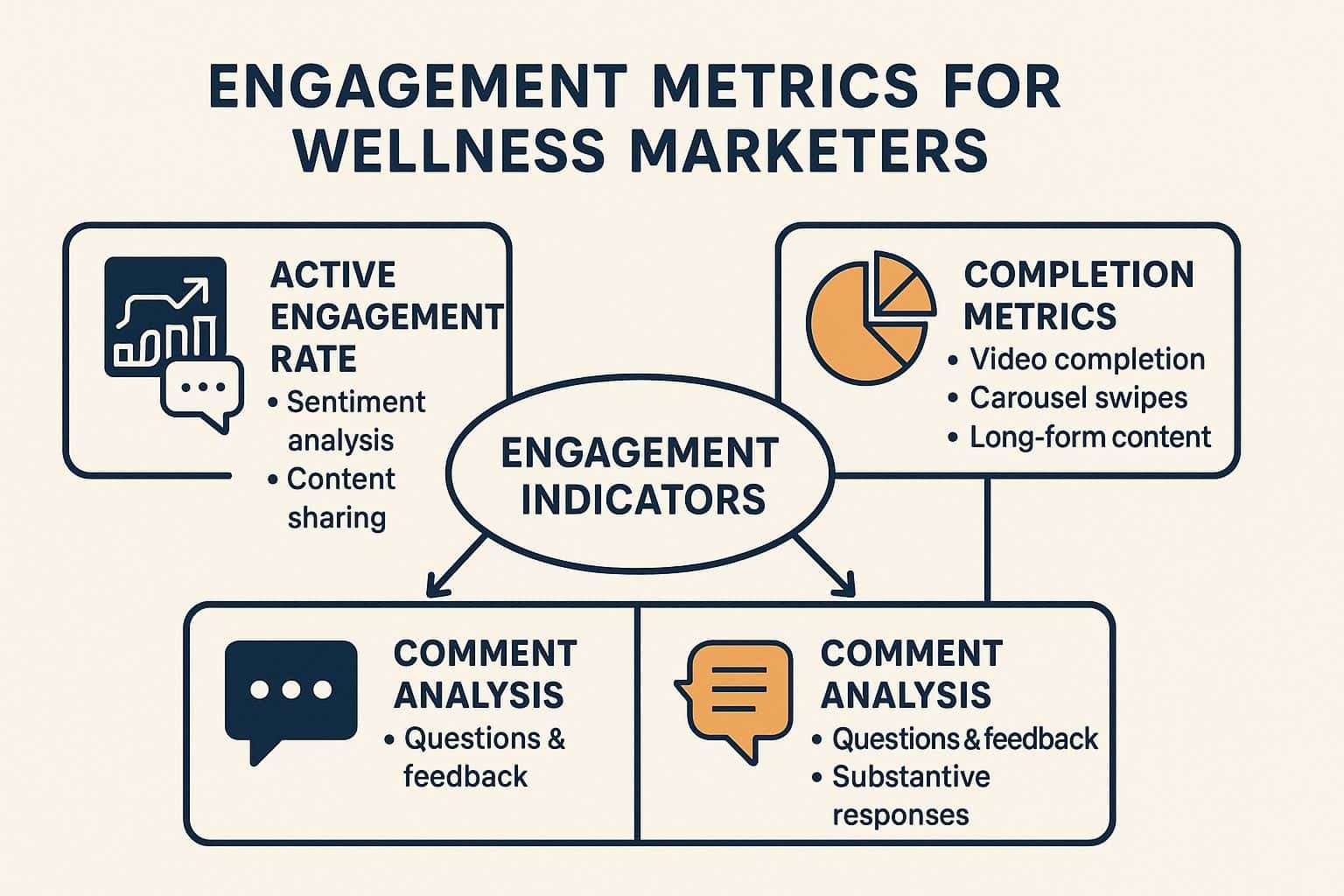
Sophisticated wellness marketers have moved beyond basic vanity metrics to focus on engagement indicators that correlate with business outcomes. Rather than raw follower counts or generic like metrics, they track active engagement rates (comments + shares / impressions), sentiment analysis of audience responses, and content sharing behaviors that indicate strong resonance. These nuanced metrics provide much clearer signals about content effectiveness than surface-level alternatives.
Particularly valuable are completion metrics that track audience retention through content. Video completion rates, carousel swipe-through percentages, and long-form content consumption patterns reveal much more about audience interest than simple impression numbers. For wellness practitioners, these attention metrics provide critical feedback about which topics, approaches and educational frameworks most effectively maintain audience interest.
Comment analysis offers perhaps the richest qualitative feedback for wellness content. Beyond simple comment counts, analyzing the substance of audience responses—questions asked, experiences shared, objections raised—provides invaluable insight for content refinement. Many successful practitioners use these organic audience questions to guide subsequent content creation, ensuring perfect alignment with actual consumer information needs.
Tracking the Path from Social Post to Purchase
Establishing clear attribution for wellness purchases has traditionally been challenging, but improved analytics tools now enable much more precise tracking of customer journeys. Implementing unique tracking links, platform-specific landing pages, and dedicated promotion codes allows practitioners to identify which specific content pieces drive conversion actions. This granular understanding supports more efficient content investment by revealing exactly which approaches generate measurable returns.
The most sophisticated wellness brands implement full-funnel measurement frameworks that track progression from initial awareness through consideration milestones to ultimate conversion. These models recognize that effective social strategies create incremental progression rather than immediate purchases—particularly in wellness categories requiring significant education or behavior change. Tracking metrics like content consumption sequences, email sign-ups, and information requests provides visibility into these crucial intermediate steps.
For practitioners with physical locations, implementing “how did you hear about us” protocols during intake processes captures valuable attribution data from clients who may have discovered services through social channels but booked through other means. This offline tracking fills important gaps in digital attribution models, providing more complete understanding of social marketing effectiveness.
Cost-Per-Acquisition Benchmarks by Platform
UK Wellness Industry Social Media Acquisition Costs (2024)
Facebook: £14.72 per customer
Instagram: £21.35 per customer
TikTok: £23.47 per customer
YouTube: £16.83 per customer
LinkedIn: £32.59 per customerSource: UK Wellness Association Social Media Benchmarking Report 2024
Understanding industry benchmarks helps practitioners evaluate their own acquisition costs relative to market standards. The figures above represent average costs across multiple wellness categories, with significant variation based on specific niches, target demographics, and competitive intensity. These benchmarks provide useful context for performance evaluation while recognizing that individual business models may justify higher acquisition costs—particularly for services with substantial lifetime customer value.
Future-Proof Your Wellness Social Strategy
The social media landscape continues evolving rapidly, with new platforms emerging and existing platforms regularly changing algorithms and features. Rather than chasing every new trend, successful wellness practitioners build adaptable frameworks based on enduring principles that transcend specific platforms or features. This approach creates sustainable advantages while allowing tactical flexibility as the environment changes.
The foundation of future-proof wellness marketing lies in genuine expertise and authentic connection rather than technical platform manipulation. Practitioners who consistently demonstrate subject matter authority, share valuable insights, and build meaningful community relationships maintain effectiveness regardless of algorithm changes or platform shifts. This expertise-first approach creates resilience against the constant disruption that challenges purely tactical social marketers.
Frequently Asked Questions
The following questions represent the most common concerns raised by UK wellness practitioners regarding social media marketing effectiveness. These practical answers provide actionable guidance based on current market conditions and proven best practices.
Understanding these fundamental principles helps practitioners develop social strategies aligned with actual consumer behaviors rather than assumptions or outdated models. While specific tactical implementations may vary based on individual circumstances, these core insights apply across wellness categories and business models.
Which social media platform delivers the highest ROI for UK wellness businesses?
For most UK wellness practitioners, Instagram continues delivering the highest overall ROI when considering both acquisition costs and customer lifetime value. While Facebook offers lower initial acquisition costs (£14.72 vs £21.35), Instagram-acquired customers show 22% higher retention rates and 31% higher average order values, creating superior long-term returns. However, this varies significantly by wellness niche and target demographics—practitioners focusing on corporate wellness programs typically see better returns from LinkedIn, while those targeting Gen Z audiences often find TikTok more cost-effective.
The most successful approach combines primary focus on one platform (typically Instagram for consumer wellness) with strategic presence on 1-2 secondary platforms based on specific business objectives. This focused approach prevents resource dilution while maintaining visibility across relevant consumer touchpoints. For new practitioners with limited resources, mastering a single platform before expanding creates more sustainable growth than attempting simultaneous presence across all channels.
How much should a UK wellness business invest in social media marketing?
Successful UK wellness businesses typically allocate 12-18% of revenue to marketing, with social media representing 35-50% of that budget. However, these percentages vary significantly based on business maturity, growth objectives, and competitive intensity. Early-stage practitioners often require higher percentage investments to build initial awareness, while established businesses with strong referral flows may maintain effectiveness with lower percentages. The critical factor isn’t the absolute percentage but rather the efficiency metrics—cost-per-acquisition relative to customer lifetime value should maintain at least a 1:3 ratio for sustainable growth.
What content formats drive the most engagement for wellness practitioners?
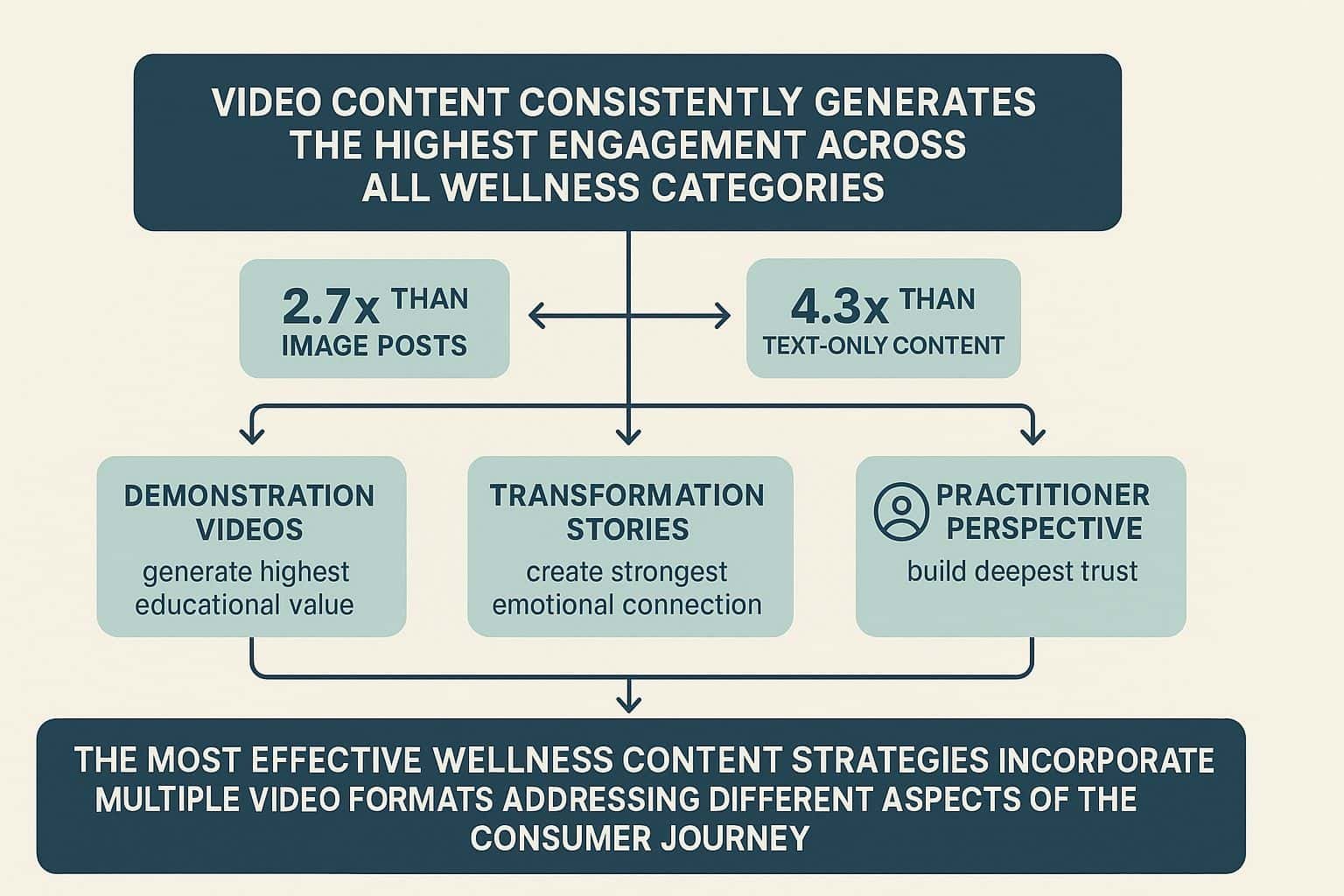
Video content consistently generates the highest engagement across all wellness categories, with 2.7 times higher interaction rates than image posts and 4.3 times higher than text-only content. Within video formats, specific approaches show varying effectiveness: demonstration videos explaining techniques generate highest educational value, transformation stories create strongest emotional connection, and practitioner perspective videos build deepest trust. The most effective wellness content strategies incorporate multiple video formats addressing different aspects of the consumer journey, from problem awareness through solution understanding to implementation support.
How can small wellness businesses compete with larger brands on social media?
Small wellness businesses maintain several structural advantages over larger competitors in social media effectiveness. Their authentic practitioner voices typically generate stronger trust than corporate messaging, with 60% of consumers rating independent expert content as more credible than brand communications. Their ability to engage directly with audience comments creates deeper relationship building than automated or outsourced responses. Their local market knowledge allows more relevant content customization than national campaigns permit.
The most successful small wellness businesses leverage these inherent advantages rather than attempting to match larger competitors’ content volume or production values. By focusing on expertise demonstration, authentic connection, and community building within specific niches, independent practitioners often achieve engagement rates 3-4 times higher than corporate wellness brands—despite significantly smaller audience sizes. This engagement quality advantage frequently translates to lower acquisition costs and stronger customer loyalty, creating sustainable competitive positions.
What regulatory considerations should UK wellness brands be aware of when posting on social media?
UK wellness practitioners must navigate increasingly complex regulatory requirements when marketing through social media channels. The Advertising Standards Authority (ASA) and Medicines and Healthcare products Regulatory Agency (MHRA) actively monitor wellness claims, with particular scrutiny on health outcomes, medical benefits, or treatment claims. These regulations apply equally to all content formats including captions, hashtags, and user testimonials—making comprehensive compliance essential for sustainable social marketing.
For regulated practitioners (nutritionists, therapists, etc.), professional body guidelines impose additional requirements regarding client confidentiality, testimonial usage, and qualification presentation. The most effective approach combines careful claims substantiation, proper qualification disclosure, and clear distinction between general information and personalized advice. Using conditional language (“may help” rather than “will cure”) and focusing on wellbeing improvements rather than medical outcomes significantly reduces regulatory risk while maintaining marketing effectiveness.